HYPERSCALE vs. AI DATA CENTERS
19 October 2026
If you have been following the tech world over the last few years, you have probably heard the terms hyperscale data center and AI data center used interchangeably. But behind the scenes, a massive architectural revolution is taking place. While both types of facilities are massive in scale, they are built for entirely different purposes.
Traditional hyperscale data centers are the backbone of the modern cloud, while AI data centers are the heavy-duty engine rooms powering neural networks, large language models (LLMs), and complex machine learning workloads.
1. What is a Hyperscale Data Center?
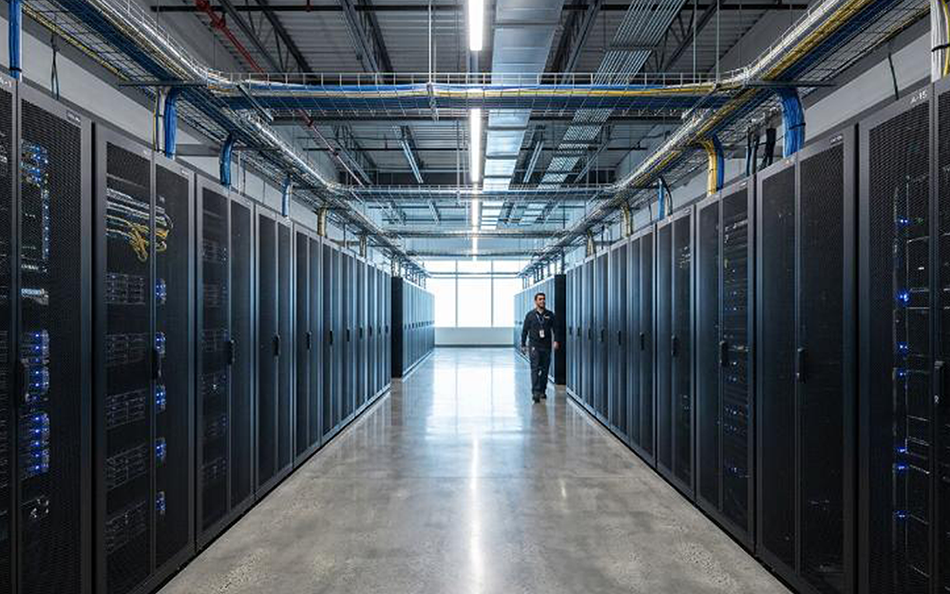
A hyperscale data center is a massive facility—often the size of multiple football fields—owned and operated by tech giants like Amazon (AWS), Microsoft (Azure), Google, and Meta.- Primary Purpose: Cloud computing, general storage, enterprise virtualization, and web hosting.
- Architecture: Designed for horizontal scaling. They house hundreds of thousands of standard servers distributed globally to handle millions of simultaneous independent requests (like streaming a movie, checking email, or browsing an e-commerce site).
- Cooling: Traditionally relies on standard air-cooling systems (HVAC and raised floors) because standard servers generate manageable heat levels per rack.
- Core Hardware: Standard CPUs and distributed storage.
- Power Density: 5 kW to 15 kW per rack.
- Networking: Standard Ethernet / fiber for distributed traffic.
2. What is an AI Data Center?
An AI data center is a specialized, high-performance facility engineered specifically to train and run machine learning models. Instead of spreading general compute tasks across thousands of standard servers, AI data centers concentrate immense computing power into tight, interconnected clusters.- Primary Purpose: Training and executing deep learning models, generative AI applications, and real-time inference.
- Architecture: Built around specialized hardware accelerators like GPUs (Graphics Processing Units) and TPUs rather than traditional CPUs. These systems require constant, ultra-fast data sharing between chips.
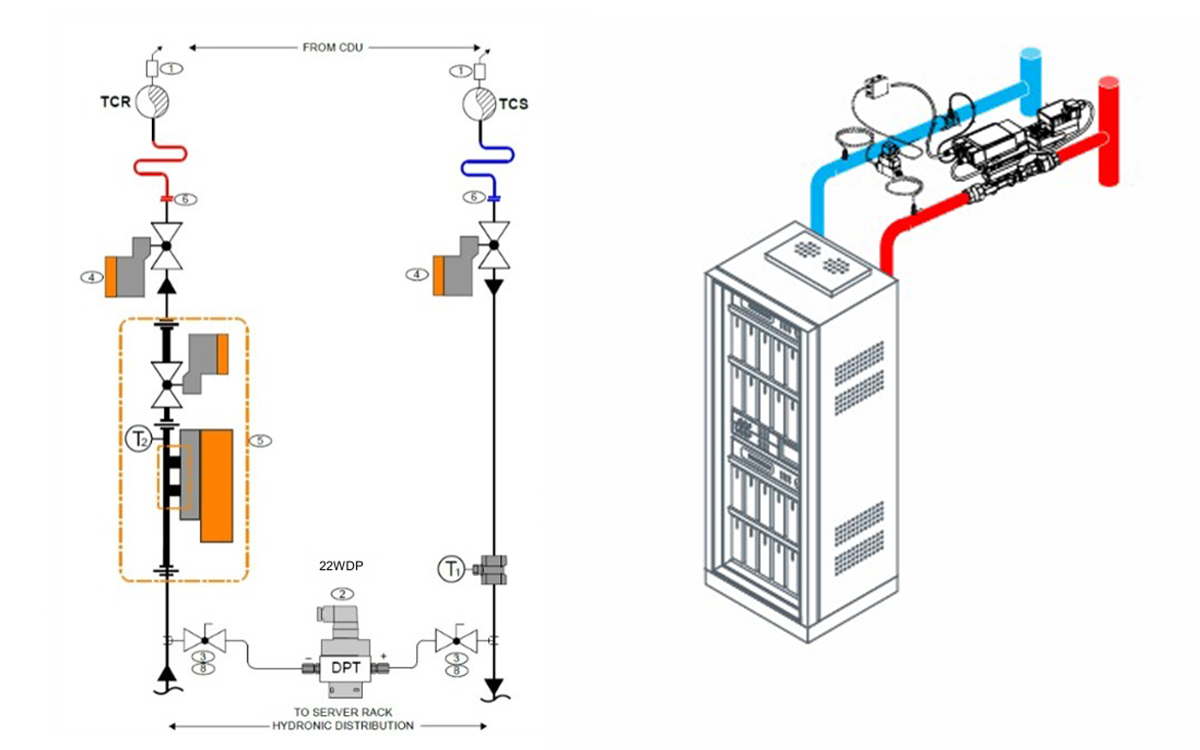
- Cooling: Because modern AI accelerators run extremely hot, air cooling is no longer enough. These facilities rely heavily on liquid cooling and direct-to-chip cooling technologies.
- Core Hardware: High-performance GPUs and AI accelerators.
- Power Density: 50 kW to 150 kW+ per rack.
- Networking: Low-latency interconnects (InfiniBand, RoCE).
Why the Distinction Matters
The shift from traditional hyperscale to AI-optimized data centers is reshaping everything from real estate to global energy infrastructure:- The Power Crunch: AI data centers consume staggering amounts of electricity. While a standard hyperscale rack might draw 10 kilowatts, an AI rack packed with top-tier accelerators can easily exceed 150 kilowatts. This is forcing operators to look closely at dedicated green energy sources, nuclear power, and grid upgrades.
- The Networking Bottleneck: In a cloud data center, servers talk to each other independently. In an AI data center, thousands of GPUs must work in absolute synchronization to process a single model. This demands ultra-low latency networking fabrics like InfiniBand to prevent bottlenecks.
Conclusion
In short, hyperscale data centers are built for breadth—handling billions of everyday digital transactions simultaneously. AI data centers are built for depth—crunching massive volumes of data at lightning speed to teach machines how to think, reason, and create. As generative AI continues to scale, the AI data center is rapidly becoming the new gold standard of digital infrastructure.